

Village
Volissos
Exploring the Traditional Village of Volissos
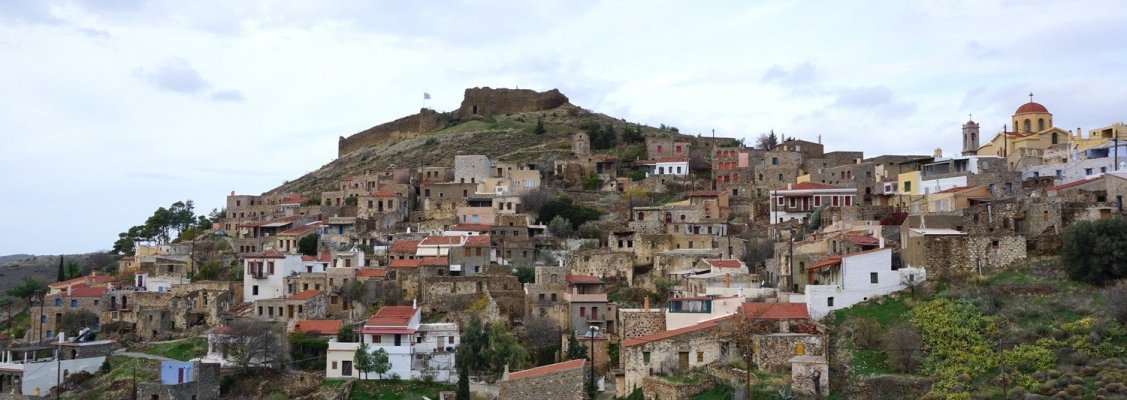
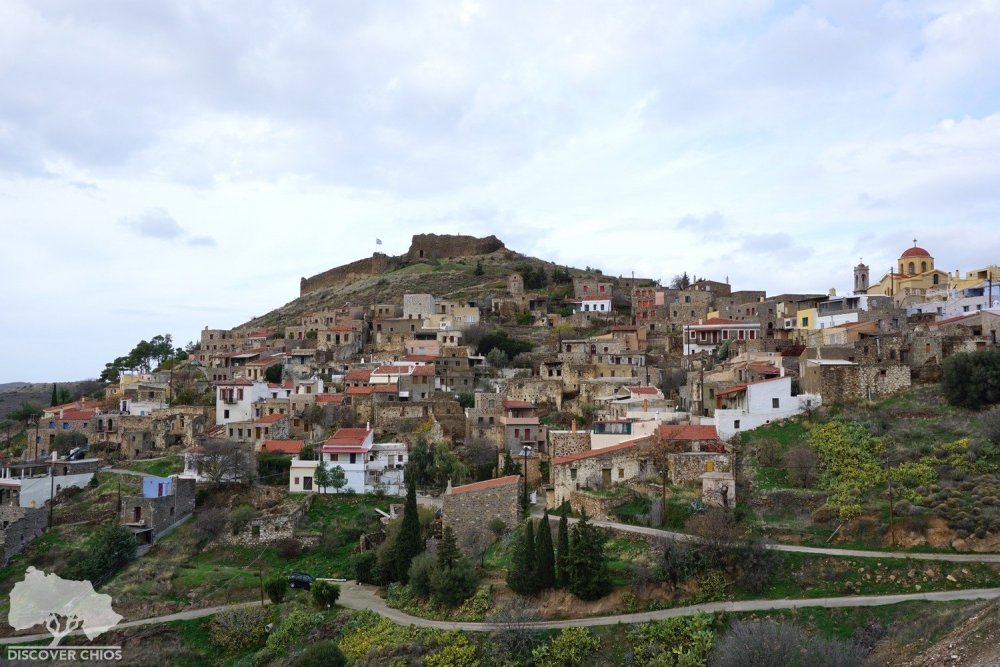
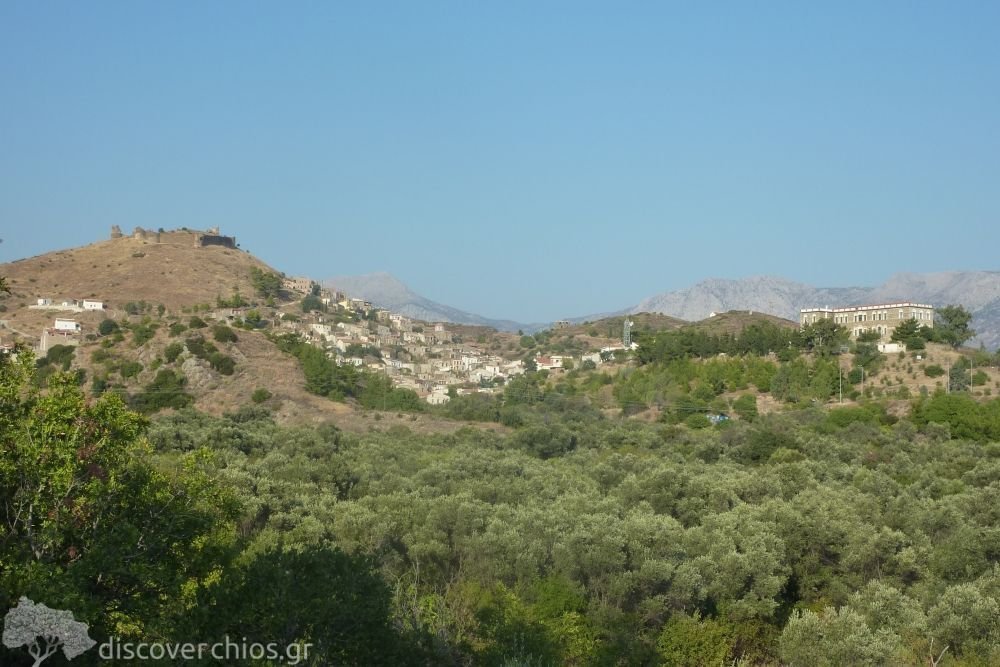
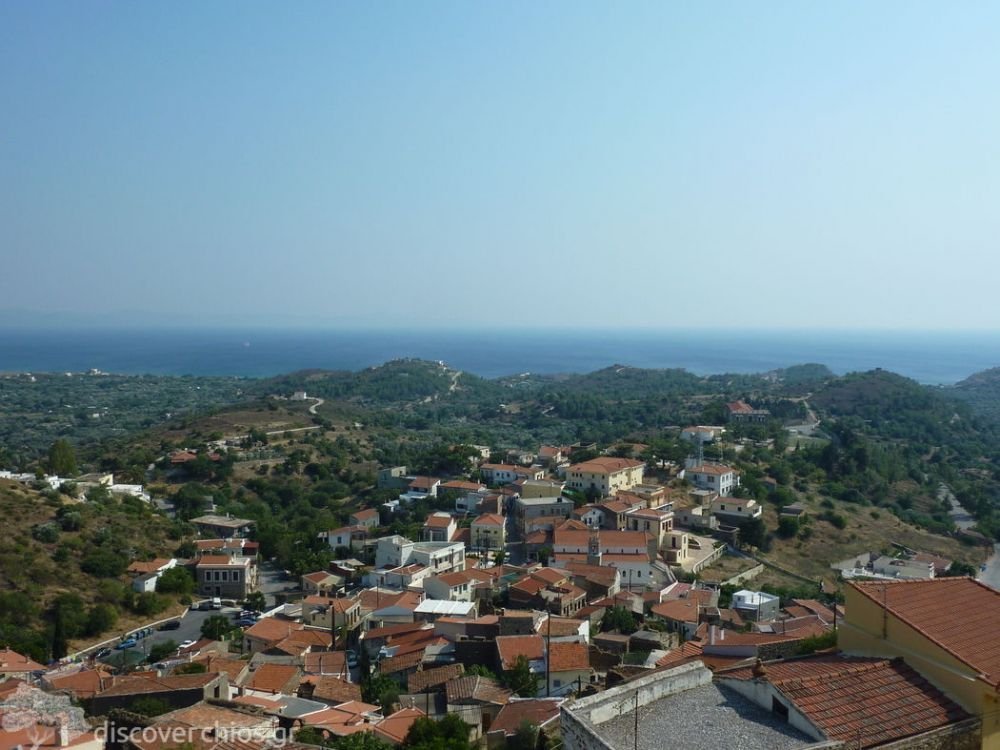
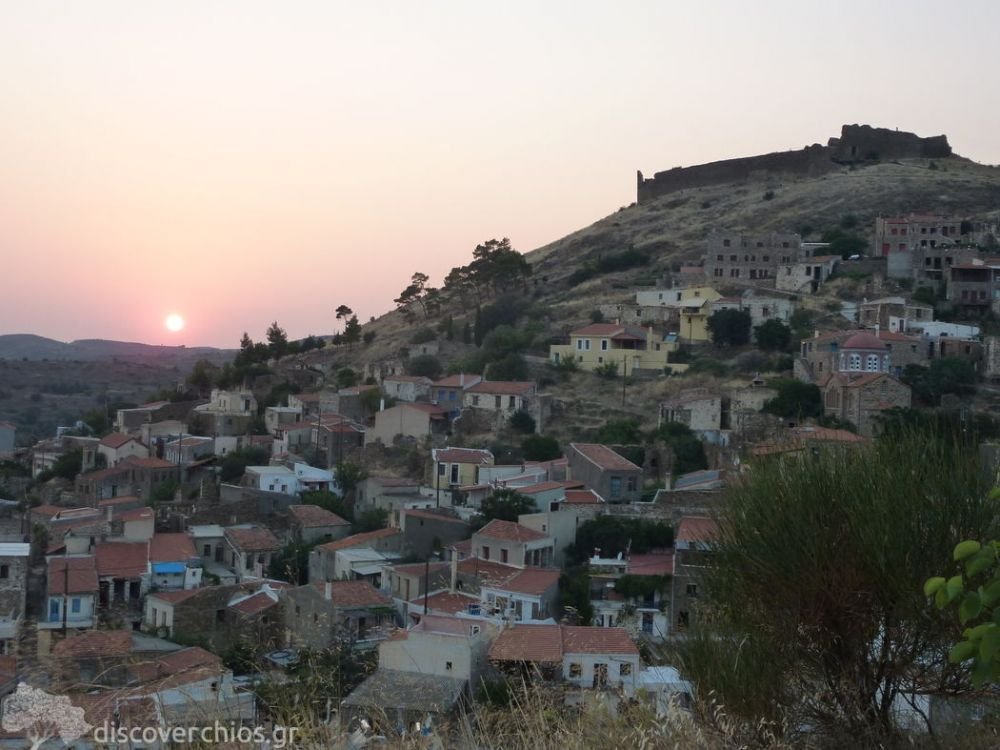
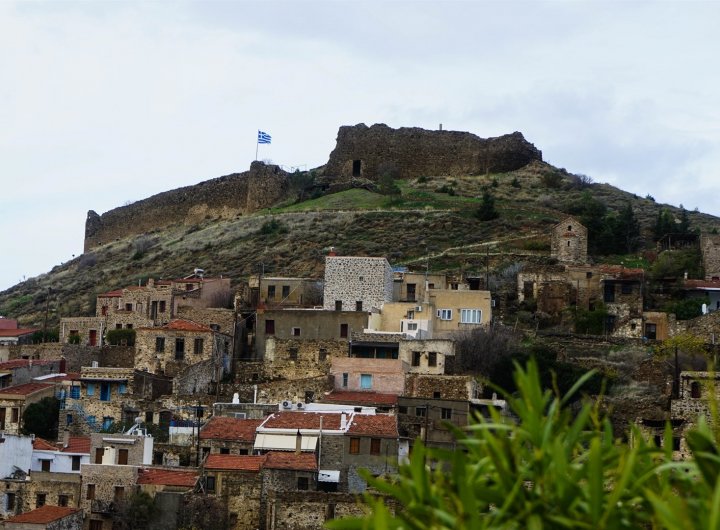
Volissos lies approximately 40 kilometres from Chios Town and is the largest village in the northwestern part of the island. Built amphitheatrically on a hillside in the Amani region, it is known for its long history, traditional architecture and beautiful views over the Aegean Sea.
It is a place that reveals itself gradually. Behind its stone houses, narrow lanes and the shadow of its medieval castle lies a history spanning centuries, shaped by trade, agriculture, religious life and the traditions of Amani.
The settlement is divided into three main districts: Christos, Pyrgos and Pythonas. Walking through these neighbourhoods allows visitors to discover different sides of Volissos, from its former commercial and administrative centre to the oldest houses clustered near the castle.
A suggested route begins at the Archaeological Collection and the main square, continues towards Platanos and the district of Pyrgos, and climbs up to the castle. From there, the road around the hill leads towards Pythonas and eventually back to the centre of the village.
The Archaeological Collection of Volissos
The Archaeological Collection is housed in the Konaki, a stone-built 19th-century mansion that was once used as the residence of the Ottoman judge responsible for the area.
The exhibition is dedicated to Ariousian wine, the renowned wine produced in northern Chios during antiquity. Through pottery, amphorae and other archaeological finds, it presents the wine trade, its connection with the worship of Dionysus and its role in the social and religious life of the ancient world.
The collection also highlights the long history of human activity in the wider region. The location of Volissos and its access to the sea contributed to the development of commercial and productive activity from as early as antiquity.
The Archaeological Collection operates seasonally, so visitors are advised to check the current opening hours before arriving.
The Main Square and the District of Christos
The main square lies in the district of Christos, which for many years served as the commercial, administrative and religious centre of Volissos.
Old shopfronts can still be seen on the ground floors of many buildings around the square and along the streets that lead away from it. They recall a time when Volissos provided goods and services for the entire Amani region.
Its cultivable land, access to the sea and position on the route from Chios Town helped establish the village as an important economic centre in the northwestern part of the island.
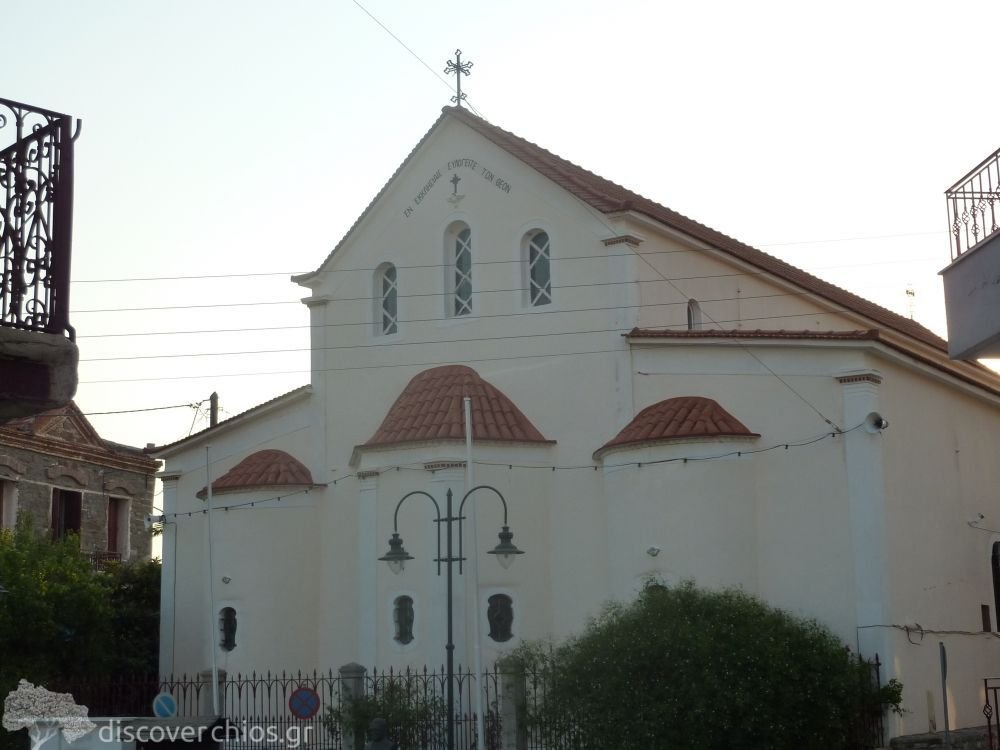
The Church of the Transfiguration of the Saviour, known locally simply as Christos, stands on the square. Opposite it is the smaller Church of Agios Minas. Christos was once the main parish church of Volissos and remains an important centre of the village’s religious and social life.
The feast of the Transfiguration is celebrated on 6 August. The traditional festivals held during August offer visitors an opportunity to experience the music, dancing and customs of the village.
According to local accounts, the square was also one of the places where the village crier would stand to announce news and official notices. Thanks to the amphitheatrical layout of the village, his powerful voice could be heard across the surrounding neighbourhoods.
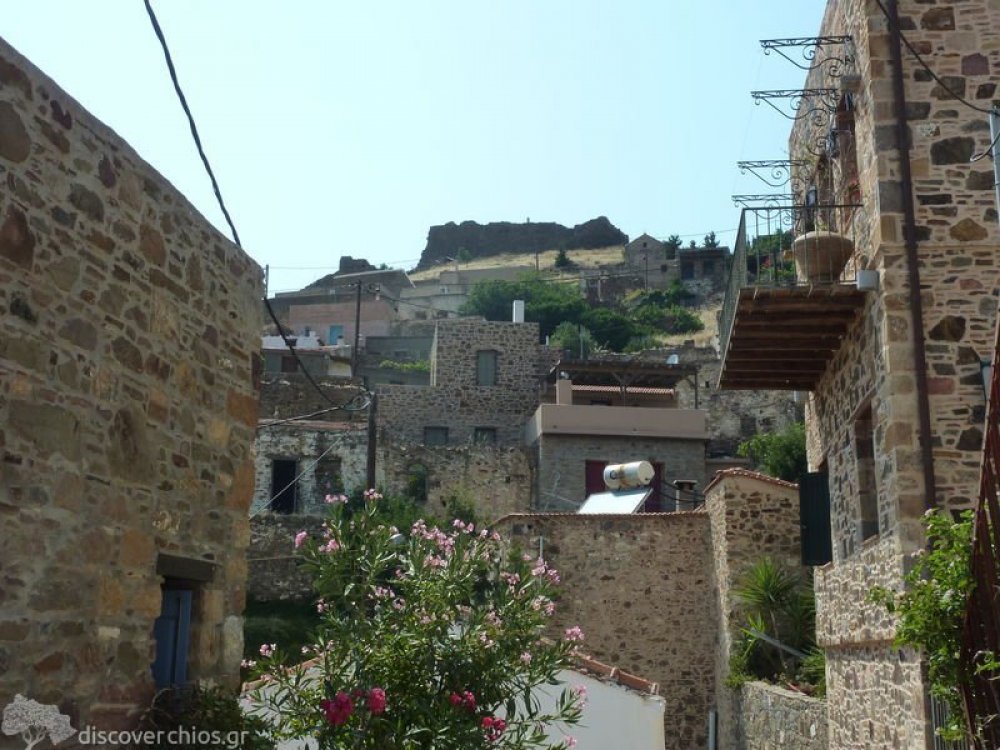
Above the rooftops rises the castle, visible from almost every stage of a walk through Volissos.
The Strongyloudiko
Near the main square stands the Strongyloudiko, one of the most interesting examples of traditional architecture in Volissos.
The building takes its name from the Strongylos family, who were closely associated with building and stoneworking. Its carefully constructed masonry, the arch on the ground floor and the overall design of its façade reflect the skill of the village’s traditional craftsmen.
Of particular interest is the marble lintel, which depicts a human hand holding a compass. The image refers to proportion, measurement and the specialist knowledge required in the art of building.
Higher on the façade is a carved stone inscription bearing the words:
“Mine today, another’s tomorrow, and never truly anyone’s.”
The inscription is a reminder of the temporary nature of ownership and expresses, in a few simple words, a view of life and time that extends far beyond the history of the building itself.
Platanos and the Village’s Former Commercial Life
A short distance below the main square is Platanos, a small open space named after the large plane tree that shades the area.
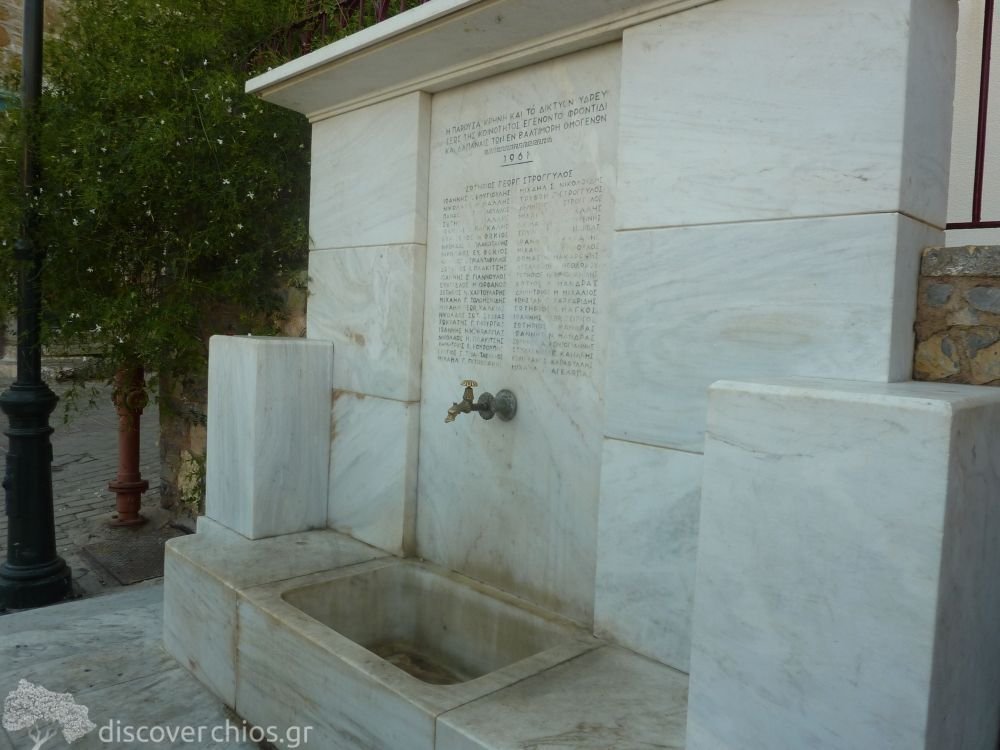
Nearby is one of the wells that once supplied the settlement with water. The area also contains a building associated with several different periods in the modern history of Volissos.
During the 1950s, it was used to produce electricity when the village acquired its own local power station. It later hosted cultural and artistic activities.
Opposite stands an old blacksmith’s workshop, a reminder of the period when Platanos was full of commercial activity. Animals and transporters arrived here from villages across Amani, while a farrier, a shoemaker and various other small workshops operated in the surrounding area.
A short distance away is Synoikismos, a neighbourhood established after the Asia Minor Catastrophe to house refugee families. Its different urban layout reflects a more recent chapter in the history of Volissos.
Fabrika
On the road towards Pyrgos stands Fabrika, a former olive press that has preserved important parts of its original equipment and architecture.
Olive cultivation was central to the economy of Volissos, and during the height of local production several olive presses operated in the village. The name Fabrika, meaning “factory”, reflected the transition from older manual methods to a more organised and increasingly mechanised production process.
Millstones and other pieces of equipment once used to crush and process the olives can still be seen inside. The olives were first ground beneath the millstones. The resulting olive paste was then spread between special fabric mats and pressed, allowing the oil to be separated from the remaining liquids and solids.
Before the introduction of mechanical equipment, animals were often used to power the machinery. The development of the olive press reflects the wider transformation of agricultural production and the local economy.
The historic building has since had several modern uses, while retaining the distinctive character of the former olive press.
Agios Nikolaos and the Religious Tradition of Volissos
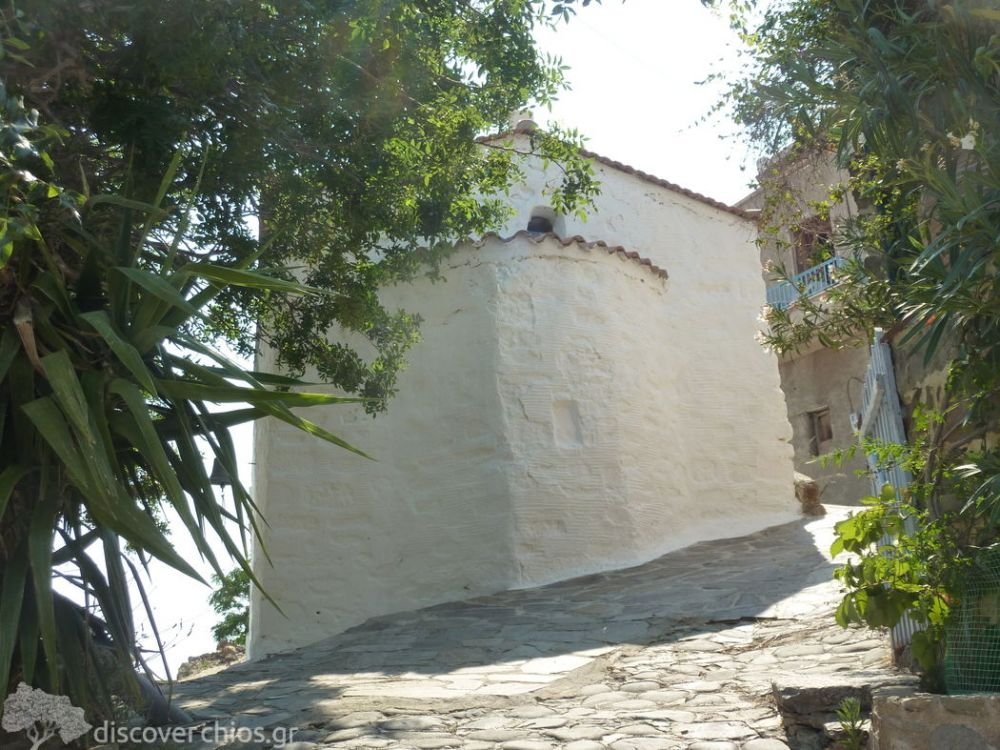
The Church of Agios Nikolaos was built in the early 20th century and is notable for its carefully constructed stonework, balanced proportions and the columns at its main entrance.
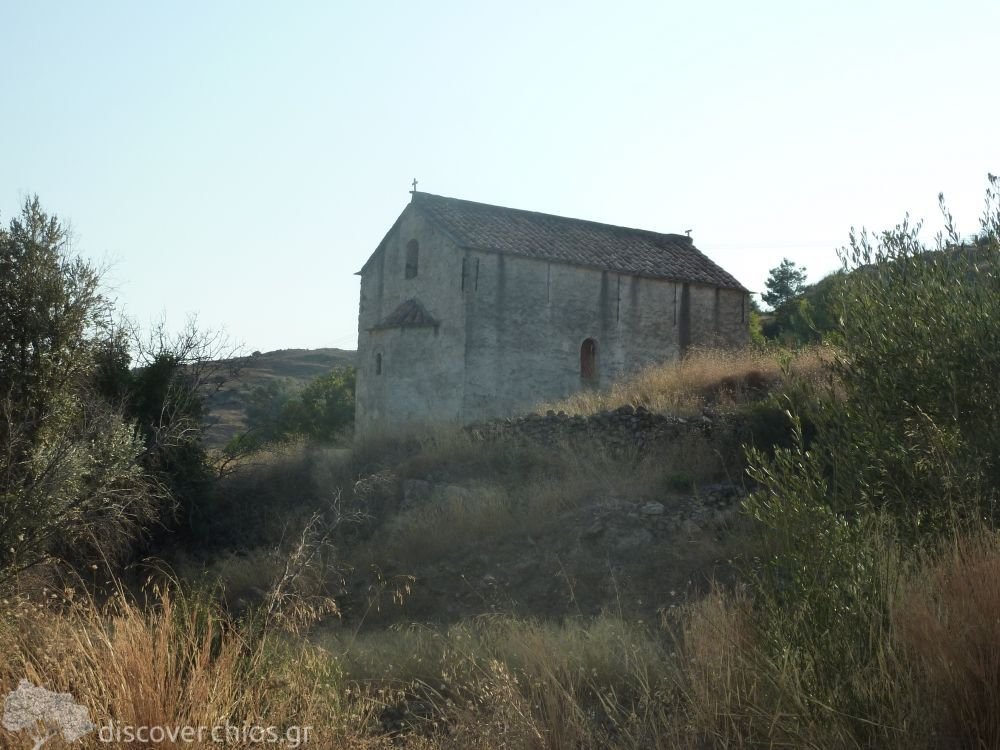
Volissos has an unusually large number of churches and rural chapels. Their presence is connected with the area’s long religious history and with the former Exarchate of Volissos, Pyrgi and Psara, which reported directly to the Ecumenical Patriarchate.
The interior of Agios Nikolaos was never fully plastered or decorated with frescoes, allowing visitors to see the stone construction clearly.
According to local tradition, after the main structure was completed, it became apparent that the large dome was out of proportion with the rest of the building. The story connects this design failure with the master builder’s profound disappointment.
Regardless of the historical accuracy of the story, the church remains an important example of the central role played by stone craftsmanship in Volissos.
Traditional Architecture
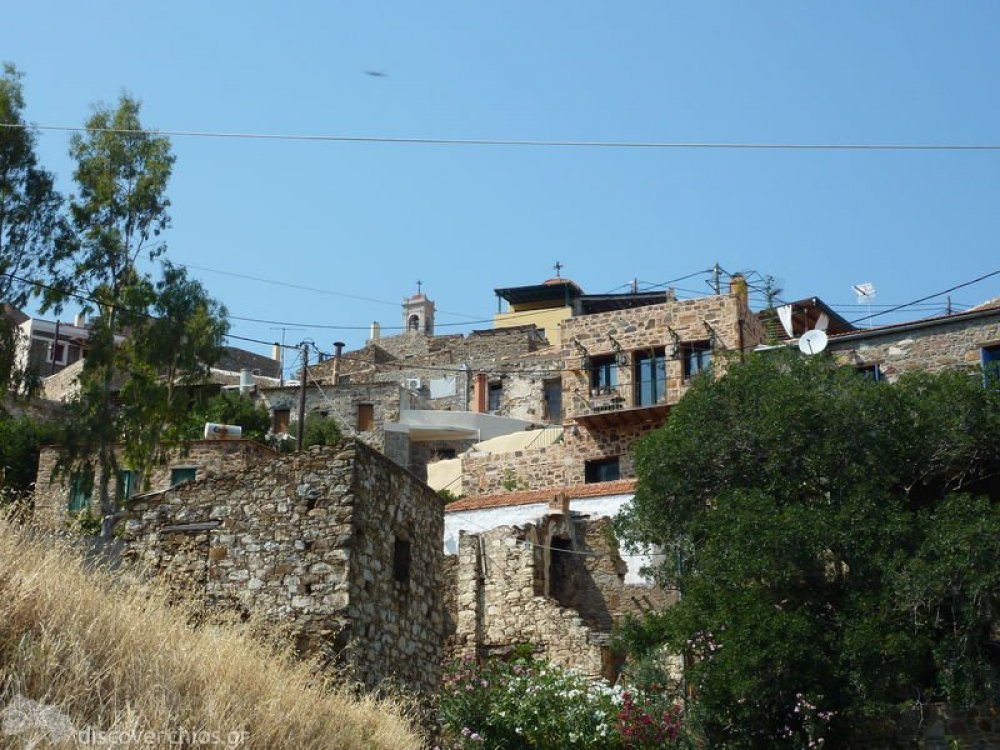
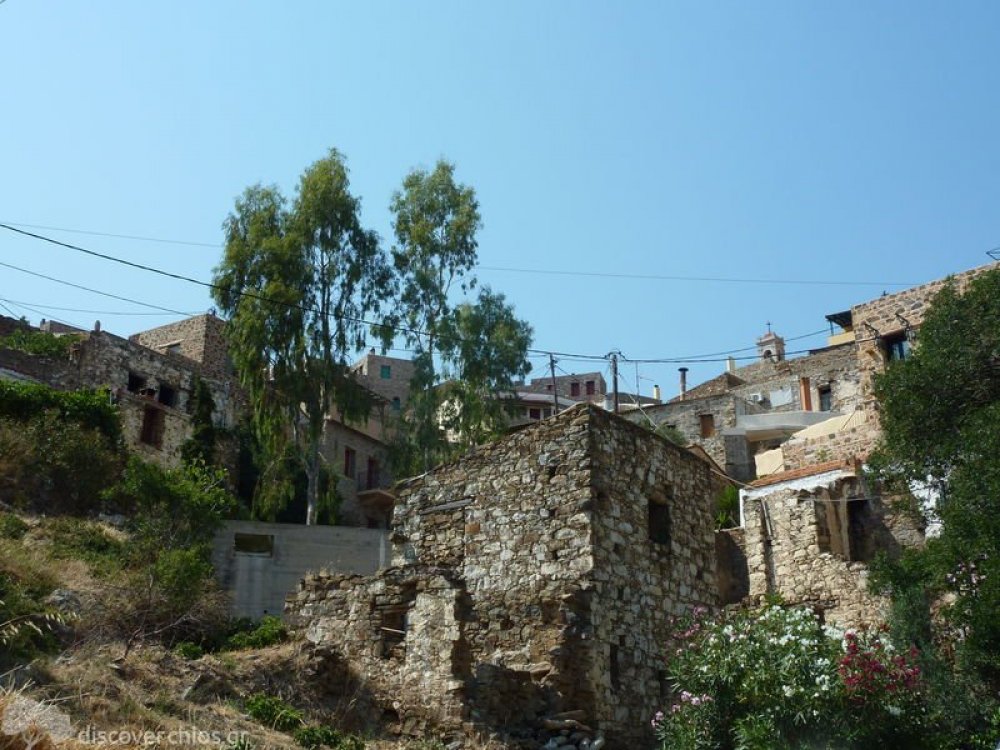
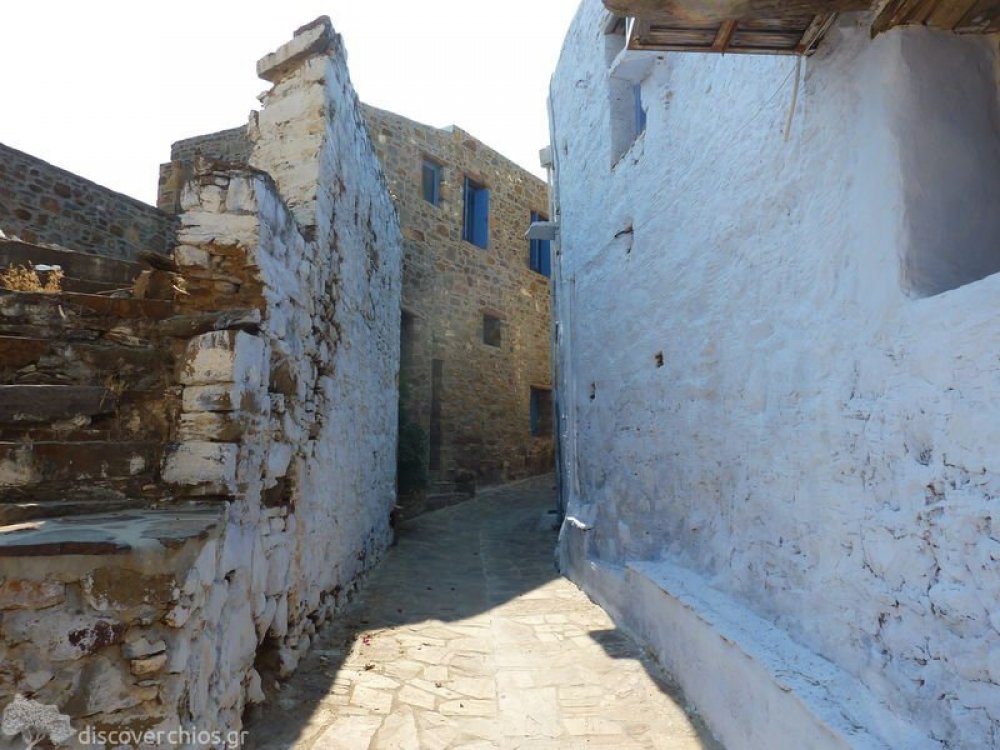
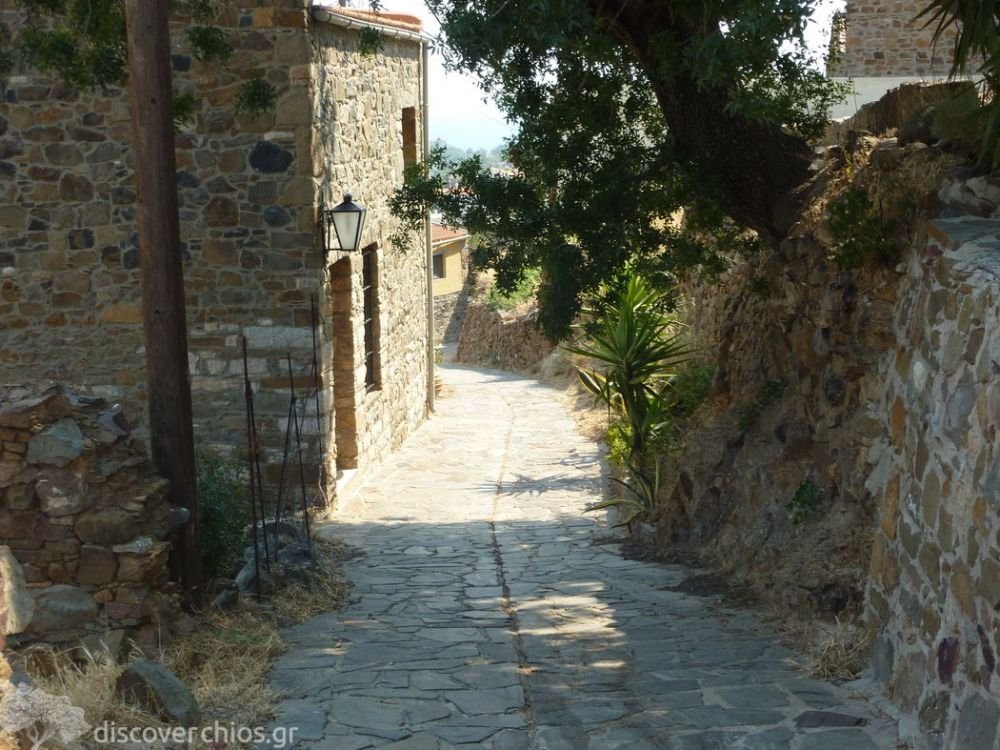
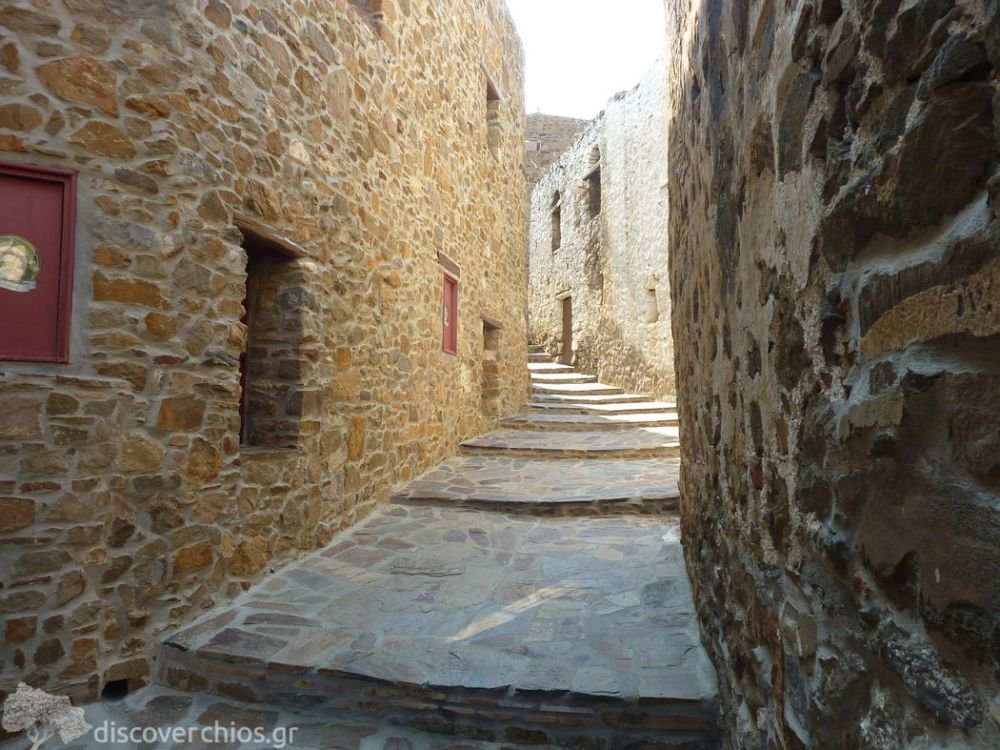
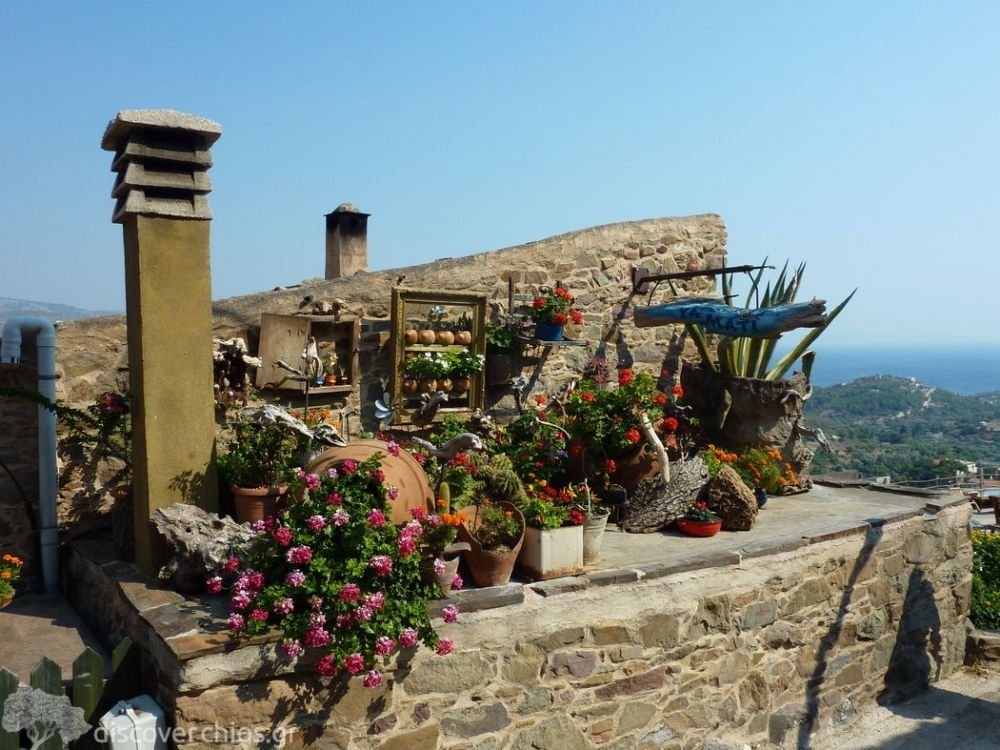
The architecture of Volissos is closely adapted to the shape of the hillside. Houses follow the slope of the land, often share walls and form a dense network of narrow paths, stone steps and small open spaces.
Stone is the principal building material. It was usually sourced locally and used with relatively little processing. Exterior walls were pointed, while the interiors were covered with a plaster made from earth. In some cases, animal hair was added to improve its strength and cohesion.
The oldest houses did not have tiled roofs but flat terraces. These were supported by wooden beams, over which smaller pieces of wood, branches, reeds and other plant materials were laid. A special clay-rich soil was then applied to make the roof watertight.
Openings were usually small, both for security and for protection from the weather. In some early houses, individual rooms were not connected internally but were accessed by external stone staircases.
The small squares in front of the churches were the main public open spaces of the village. They were places where residents gathered and where much of the social life of Volissos took place.
Agios Georgios and the District of Pyrgos
Pyrgos is considered one of the oldest parts of Volissos. It developed close to the castle, in a position that offered greater protection during periods of insecurity and pirate raids.
The Church of Agios Georgios is the main landmark of the neighbourhood. It is mentioned in old ecclesiastical records, although its present form is the result of a later reconstruction. Inside, its carved wooden iconostasis is particularly noteworthy.
The district was mainly inhabited by families involved in farming and livestock breeding. During the summer months, many moved to small agricultural settlements closer to their fields.
As the economy of Volissos developed, the village expanded towards Christos and Pyrgos gradually lost part of its population. However, the limited amount of modern construction helped preserve much of the neighbourhood’s traditional appearance.
A number of houses have since been restored, revealing their original stonework and architectural form.
The Castle of Volissos
The castle dominates the top of the hill and is the most important monument in the village. It was probably built during the Byzantine period and later became part of the wider defensive network of northern Chios during the Middle Ages.
Local tradition attributes its construction to Belisarius, the famous general of Emperor Justinian, who is said to have taken refuge in Volissos during a period of exile. The story is not supported by historical evidence, but it remains one of the village’s best-known legends.
The castle has a trapezoidal plan and was strengthened by six circular towers. Inside were buildings, cisterns and churches that served the needs of the population during times of danger.
Older accounts refer to an underground passage connecting the castle with the district of Pythonas. Its existence has not been confirmed through archaeological research and it should therefore be regarded as part of the village’s oral tradition.
The castle’s strategic position allowed it to control the western coastline and the surrounding sea routes. Other elements of the medieval defensive network, including towers, watch posts and fortified positions, survive in the wider area.
From the hilltop, visitors can enjoy panoramic views of the plain, the beaches, Limnia and the Aegean Sea. The landscape is particularly impressive in the late afternoon, as the sun begins to set over the water.
Limnia and the View Towards the Sea
A short distance from Volissos is Limnia, a picturesque fishing harbour overlooking the Aegean.
The harbour played an important role in transport, fishing and the commercial life of the region. In the past, Limnia even had a customs presence, a sign of its importance for maritime traffic in northwestern Chios.
Today the area is known for its small harbour, fishing boats and seafront dining options. It is an ideal place for an afternoon stroll after exploring the village or swimming at one of the nearby beaches.
Near the entrance to the harbour is Katergaropetra. According to local tradition, its name is connected with the wreck of a vessel carrying convicts who had been sentenced to serve as rowers.
Some researchers have also suggested that the ancient settlement of Volissos may have been located somewhere along this coastline. The coastal zone remains closely connected with the economic and historical development of the village.
Volissos and the Homeric Tradition
Volissos is one of the places on Chios associated with the tradition surrounding Homer.
According to local legend, the epic poet reached the area after a long journey, settled in Volissos and spent the final years of his life there.
There is not enough historical evidence to confirm the story. Nevertheless, the connection with Homer remains an important part of the identity of the village and of the wider Homeric heritage of Chios.
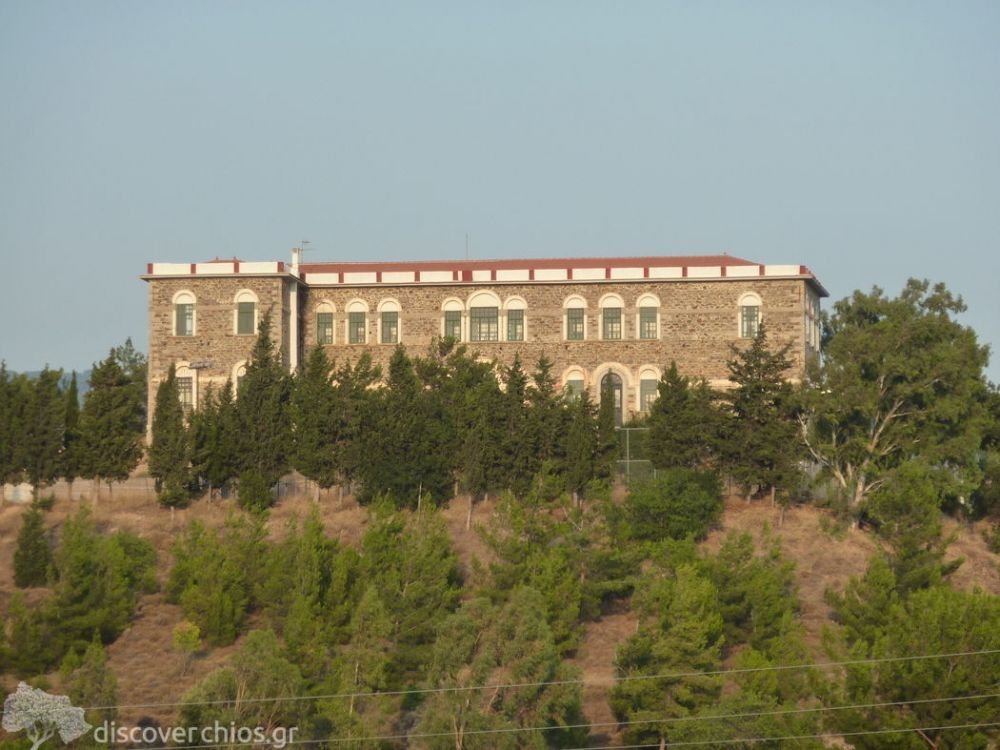
The Volissos School Building
A large stone-built school building stands prominently at the entrance to the village.
It was constructed in the early 20th century and served for many decades as the main educational centre of the Amani region. The cost of its construction was partly covered by the London Committee, a group of Chian expatriates with significant charitable and social activity.
The residents of Volissos also made an important contribution by providing voluntary labour during the construction. According to accounts from the period, the village crier would announce each evening what work and materials would be needed the following day.
The building also housed a boarding facility for students from remote villages, as the long distances and difficult road network made daily travel impossible.
It remains a distinctive example of school architecture and a reminder of the importance the local community placed on education.
The Road Around the Castle and the Plain
The road below the castle provides a different view of the village. From here, it is easy to see how the houses follow the slope of the hill and how closely Volissos is connected with both the plain and the sea.
The wider area contained substantial areas of cultivable land, distinguishing Volissos from many other villages in Amani. Its principal products included olive oil, figs, almonds and ingredients used to produce souma, the local distilled drink. Silk production and weaving were also practised in earlier periods.
Small seasonal settlements developed around the edges of the plain, where residents stayed during periods of intensive agricultural work. Skariotis, Rodonas and the area of Limnos were associated with different neighbourhoods of Volissos.
Ruins of windmills can still be seen on the surrounding hills, while remains of watermills survive deeper within the plain. These installations used wind and water to process agricultural products.
The Malangiotis Valley and the Watermills
The Malangiotis stream crosses the plain of Volissos, creating a fertile valley with olive trees and riverside vegetation.
Remains of old water-powered installations survive in the area of Panagia ton Neromylon. Their presence shows that the waters of the stream were systematically used for productive activity.
Today, the valley forms part of a circular walking route that begins in Volissos, crosses the plain and the area of the watermills, and returns to the village. It is a relatively gentle walk through a landscape where the natural environment and traces of traditional agricultural life exist side by side.
The Church of the Taxiarches in Pythonas
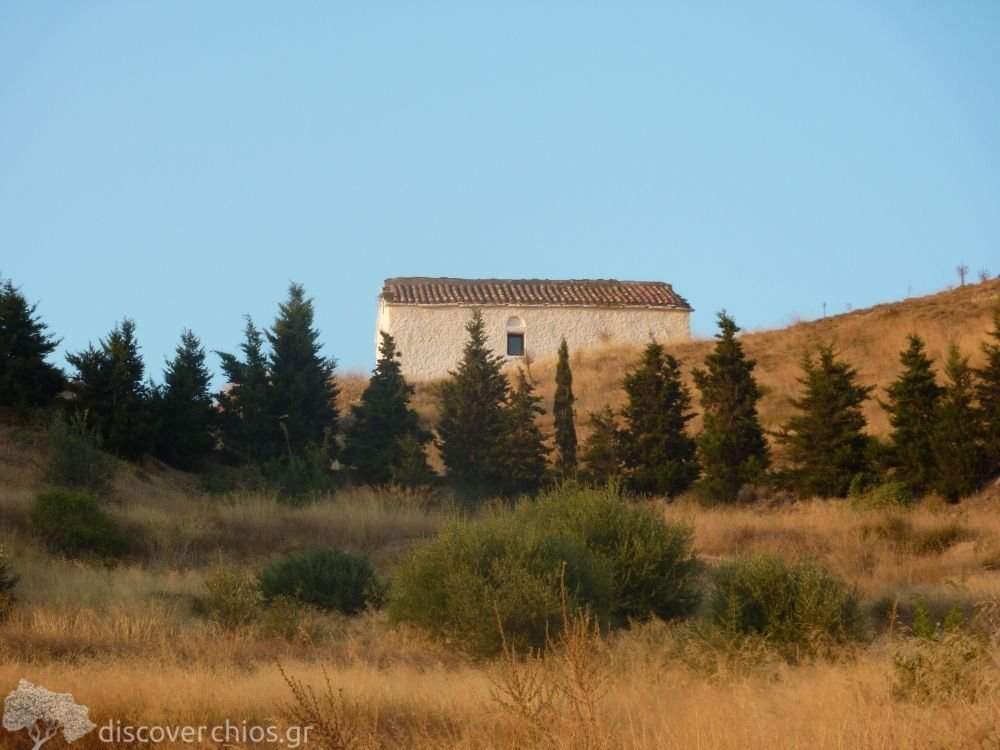
The route towards Pythonas passes the Church of the Taxiarches, which is mentioned in ecclesiastical records dating from the 18th century.
The size of the church suggests that the area once supported a substantial population. Its exterior features include a marble lintel, a simple bell tower and distinctive openings around the apse.
Close to the church, some elements associated with the former entrance to the village can still be seen. These include a carved stone set into the wall of a house, which local tradition identifies as part of the mechanism that once supported the settlement’s gate.
Pythonas Square
Pythonas is one of the three principal districts of Volissos. Its name has been associated with several local traditions, including a story about a dragon said to have lived in the area.
It has also been linked with the ancient myth of Apollo and Python, although there is no documented historical connection.
The architecture of the district displays stronger neoclassical and urban influences. Here visitors will find larger two-storey and three-storey houses, tiled roofs, broad openings and more elaborate wooden window frames.
Many of the ground floors were once used as shops, reflecting the former commercial activity of the neighbourhood.
The Church of the Dormition of the Virgin Mary is the central landmark of the district. Its courtyard is notable for a decorative floor created with liladia, small sea pebbles carefully arranged to form patterns.
The feast of the Dormition is celebrated on 15 August, when the square and the surrounding neighbourhood become the centre of the festivities.
Pythonas Square hosts religious celebrations and traditional festivals. Volissos is particularly well known for its musical and dancing traditions, including the Arapi Sousta, a local dance associated in collective memory with the pirate raids of earlier centuries.
Thomas Tsolakis and the Memory of Traditional Crafts
Thomas Tsolakis holds an important place in the modern cultural memory of Volissos and is regarded as one of the last representatives of the traditional craft of saddle-making on Chios.
His workshop and collection became closely associated with the preservation of old tools, household objects, agricultural knowledge and elements of the village’s oral tradition. Part of the collection has been presented to the public with the support of volunteers and people committed to preserving the cultural heritage of Volissos.
The importance of the collection lies not only in the objects themselves, but also in the knowledge associated with them. Traditional methods of working with materials, techniques related to plants and cultivation, local events and legends are all part of an oral history that might otherwise disappear.
Among the stories that have survived is the legend of the Sunless King.
According to tradition, a king suffered a severe head injury and the missing part of his skull was replaced with wax. From then on, he could not go out in sunlight, as the heat would melt the wax and cause his death.
The king travelled only at night and relied on the crowing of a rooster to ensure he returned to his castle before sunrise. One day, his servant killed the rooster and the king failed to realise that dawn was approaching.
As he returned from Panagia sta Loutra, daylight caught him on the road and he was unable to reach the castle. The legend is associated with places around Pispilounta, Malangiotis and Panagia ton Neromylon.
The Old Wood-Fired Bakery and Local Tradition
The modern history of Volissos is also connected with the village’s old wood-fired bakery, where bread was baked for decades with a live fire inside the oven chamber.
The bakery became known for its simple interior, the smell of burning wood and its traditional production methods. It was not only a place where people bought bread, but also an everyday meeting point for the residents of the village.
The bakery was closely associated with Giannis Kouroupis, known in Volissos by the nickname Klossas. Giannis Kouroupis died in 2025, leaving a lasting mark on the social and cultural life of the village.
He was remembered not only for his bread, but also for his songs, his presence at village festivals and his involvement in the Carnival traditions of Volissos. The family tradition of the bakery continued, preserving the distinctive baking method that made it known throughout Chios.
Diplos and Carnival
One of the most characteristic traditions of Volissos is Diplos, a circular dance associated with Carnival.
In the past, groups would set out from different neighbourhoods of the village, join hands in a distinctive way and make their way towards the main square of Christos while singing.
The songs often included satirical couplets commenting on local people and situations from everyday life. Once they reached the square, the different groups joined together in a large celebration.
Diplos was not simply a dance, but a way for the entire community to participate in the festivities.
The Beaches of Volissos
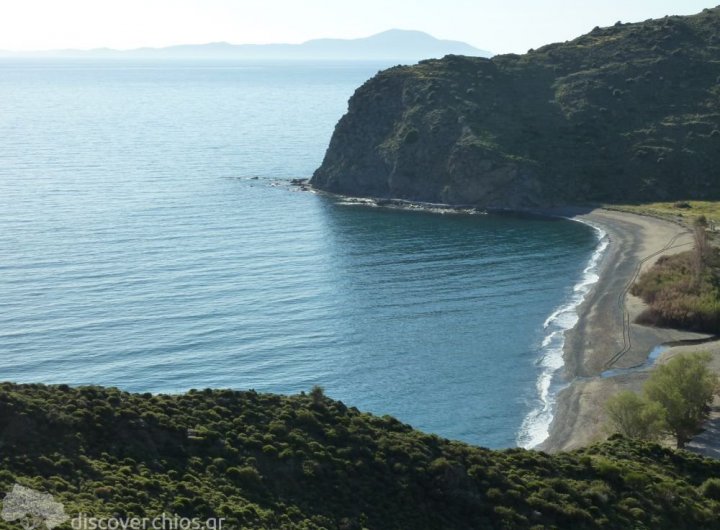
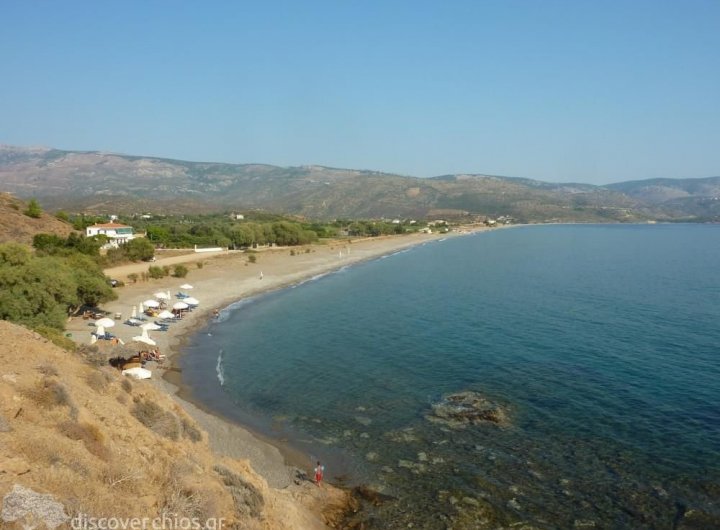
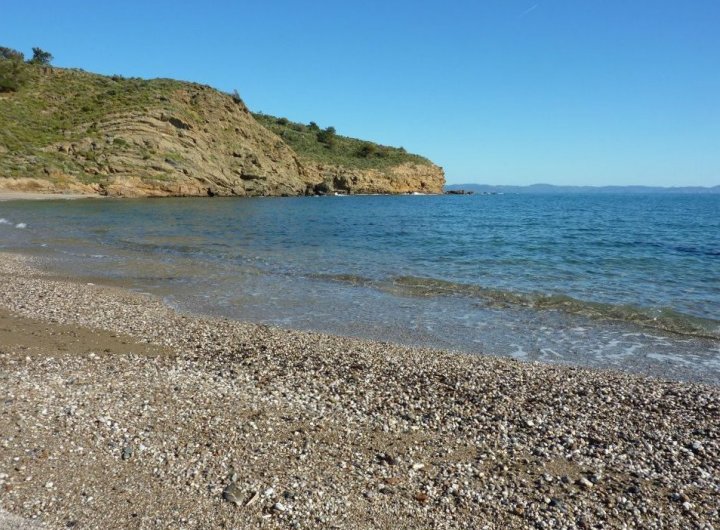
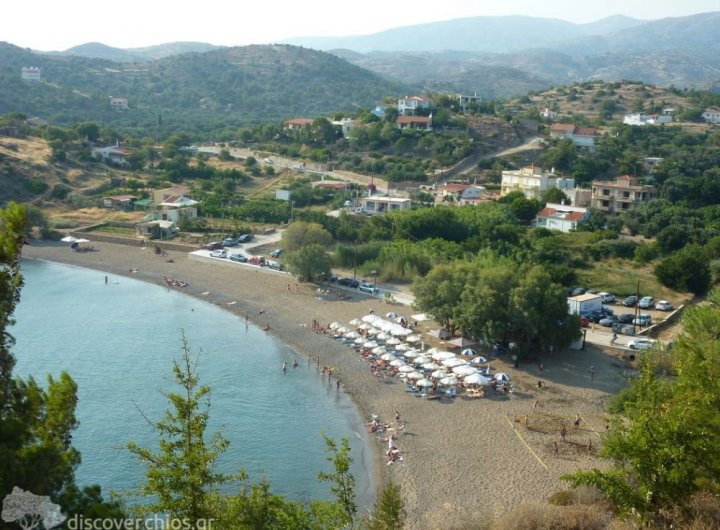
Some of the most beautiful beaches in northwestern Chios are found around Volissos.
Managros, Magemena, Gonia, Lefkathia, Limnos, Lampsa and Agia Markella offer a variety of swimming options, ranging from long, open stretches of coast to smaller and quieter coves.
Managros is particularly notable for its length, while Lefkathia and Limnos are located near Limnia and are easily accessible from the village.
The western coastline is exposed to the open Aegean, and sea conditions can change depending on the wind.
Agia Markella
Approximately eight kilometres from Volissos is the pilgrimage site of Agia Markella, the patron saint of Chios.
The monastery stands almost directly beside the beach, facing the island of Psara, in an area known for its cold, deep waters.
A coastal path begins at the beach and leads to the place where, according to tradition, Saint Markella was martyred. At this particular point, warm water rises from the ground beneath the sea.
Every year on 22 July, thousands of pilgrims arrive from across Chios, the neighbouring islands and the rest of Greece to honour the saint.
Many complete the long journey from Chios Town on foot as an act of devotion or to fulfil a vow.
More Places Around Volissos
There is much more to discover beyond the central village.
At Vasilika, visitors can find the historic Church of Agios Georgios and the remains of an old tower. Traces of traditional agricultural installations survive at Rodonas and Limnos.
The old watermills are found in the Malangiotis Valley, while the historic Monastery of Moundon lies to the east of Volissos.
Volissos brings together a medieval past, agricultural history, religious tradition, distinctive natural landscapes and beautiful beaches. It is also an ideal starting point for exploring the villages and walking routes of Amani.
The best way to experience it is to walk slowly through its narrow lanes, observe the inscriptions and stone details on its houses, and allow the route to lead from its squares and churches to the castle and the open view of the Aegean Sea.
Must see
Worth taking a dive
made with by Politischios